The
200% Marriage
Podcast
With Meredith & Craig
The
200% Marriage
With Meredith & Craig
Subscribe to the Podcast




Listen
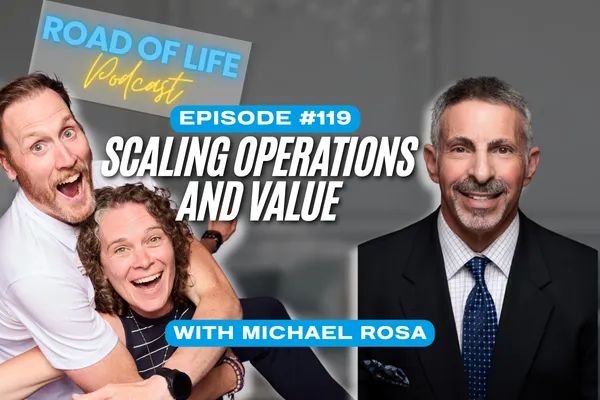
119. Scaling Operations and Value with Michael Rosa
Listen Now
Episode TranscriptionMeredith & Craig (00:01)
Meredith & Craig (00:01)
Life, yes you're on it Let every mile bring a smile, yeah
Meredith & Craig (00:09)
Welcome to the Road of Life podcast, the show for married entrepreneurs who want to build a thriving marriage and a thriving business. We're your hosts, Meredith and Craig, relationship experts and entrepreneurs ourselves. We know firsthand that your business will only grow as strong as your marriage does.
On this podcast, we share real stories, practical tools, and honest conversations to help you strengthen your relationship, fuel your business, and build a life you love together. Let's dive in.
Meredith & Craig (00:33)
Michael Rosa is a successful operations executive, business builder, and value creator with more than 20 years track record of managing and scaling companies across multiple industries. Michael shares with us the biggest influences that shaped his mindset and business savvy and how he's leveraged relationships and mentorship to build many successful businesses.
Plus he has some really cool stories about his grandfather.
Meredith & Craig (00:54)
Michael Rosa, welcome to the Road of Life podcast. we're super excited you're here, Michael.
Michael Rosa (00:59)
Well, thanks for having me. I appreciate that. Meredith and Craig, nice to see you. And we're coming live from Road of Life Studios, right? That's what it is, Road of Life Studios.
Meredith & Craig (01:08)
Yep, you got it.
Michael Rosa (01:10)
You should have that big thing, know, like MGM, should have that big, you know, saline or something like that, you know, that would be, that would be pretty cool. Maybe you'll come up with your own.
Meredith & Craig (01:13)
The lion?
Yeah.
Yeah. That's a good point. That's something we're going to put on the to-do list. That'll look good for the 2026 high production value. I love it. I love it.
Michael Rosa (01:23)
Hahaha.
Yeah, that's
right. That's right. Well, everything's a process, right?
Meredith & Craig (01:31)
Yeah, absolutely. So Michael, talk to us a little bit about your journey, what you're up to now and how you got here, your origin story, if you will.
Michael Rosa (01:39)
My origin story, well, about a thousand years ago I was hatched. No, no, I'm So, I'm just some kid from Boston, man, who ended up getting mentored and became an entrepreneur and ended up running multimillion dollar companies of my own and others. And I just, I'm a business person, entrepreneur at heart, and I just love what I do. Currently, I'm working as a fractional executive.
as well as a business development coach. And I work with startups and existing businesses, and we implement systems and structures for growth and profitability. And we use a lot of strategy work, and we use a lot of these days, we're using some AI tools for a continued education, also growth and expansion. So it's pretty cool. I kind of joke around, I wish I was born, maybe I was born a little too soon.
Cause you know, this AI revolution is happening. You everybody's talking about AI, right? And if you're not, if you're in a conversation, you don't say AI, they're like, Hey, that guy doesn't know what he's talking about. But, but you know, it's, there's some, there's so many things happening in the AI world that I can't wait to see what's going to happen. You know, I want to imagine 50 years from now, right? What's going to happen. And I, cause I still, and I'm old enough to remember that I remember when email came out.
Meredith & Craig (02:52)
Yeah, right.
Michael Rosa (03:00)
They were talking about the internet. I still remember it was the Today show back then and I remember the day It was Brian Gumbel and Jane Paul and they're like, hey, there's this thing called email Or is it or maybe it was Katie Kirk? I forget but hey this thing email electronic mail. What do you think about that? Wow, what's that? Right now email is like the post office, you know, it's just it's the same right so Anyways, I think that business for me business is exciting. I started
Meredith & Craig (03:20)
Yeah.
Michael Rosa (03:28)
I started as a little kid, my, I'll tell you a little business story, a little how I got here, right? My grandfather came to the United States from Lebanon and he came at the turn of the century, 1900. And he came, didn't know how to speak English, came through Ellis Island and found himself in Massachusetts. And he decided he was writing poetry at the time and he was teaching himself.
how to speak English and write English. So then what he did was he developed a little variety store. What we would know today to be a 7-Eleven or a Cumberland Farms or wherever you are in the country, there's different variety store chains. And he developed a variety store, little neighborhood store to support his family. And it was his, really, he wasn't married at the time.
And he brought his family over from Lebanon one at a time and helped them get into business. So he was my first example of an entrepreneur. So when I was a young kid, six years old, seven years old and so forth, I would go to work with him in the store on weekends and whenever there was school vacation and things. I'd go there and he would teach me how to do certain things.
Ring the register back in the day, there was an old NCR register. If you wanted 15 cents, had to hit 10 and five and push the buttons. And it was an old, made a lot of noise. It was cool back then because, uh, I mean, I'll warn you folks. I liked, I just kind of take a lot of turns, but I remember one of my other mentors talking to me about when the NCR registers went away. Um, and the computer registers came in and said, what do you think? I don't know. do you think about these new registers? He said, I don't like them. Like, not?
He says, well, I can't hear myself making money because they don't make any noise. So, you know, back in the day, you could hear those NCRs going, you knew you were making some money. Cha-ching, right. So, but my grandfather, he he taught me about entrepreneurism at early stage, taught me about mathematics. He taught me how to how to add and subtract using an abacus. How about that? Wasn't even a kid, right? And we'd write things down and that's
Meredith & Craig (05:19)
That was great! Cha-ching! ⁓
⁓ wow.
Michael Rosa (05:47)
That was my first inclination into entrepreneurship. And I think that through the years, I kept working with him and then did some odd jobs and so forth, and then got into my first work environment when I was 15 and a half years old. And then it just started taking off from there. And I've loved business ever since.
Meredith & Craig (06:11)
What was like one of the big lessons or what did your grandfather kind of instill in you early on that gave you the entrepreneur bug, if you will?
Michael Rosa (06:19)
He had a business savvy, but it wasn't the best. I don't think it was the business savvy that we know today. His business savvy was to, to develop a structure where he could help his family, where he could help the community and where he could support his family. He wasn't there to get rich. He was there for, he created his own job and he always wanted it to be his own boss. So I think he, he, I think that was really what made him most happy.
but I think that, so he, and the other thing he, he taught me about, he taught me about reputation and, think reputation in business because he was, he was a reputable person. helped people when they needed help. he had a stellar reputation for honoring his word and being a man that you could rely on. And he extended during the depression age, he extended people credit.
who didn't have anything. And I don't even think he ever collected on all the kindness and generosity that he gave to all these folks. I he just let them have the food and everything they needed. And he always thought he was a religious person. said, God will give me more and I'll make more. So I think his reputation was probably reputation in business and as a man, I think was his...
greatest gift to me.
Meredith & Craig (07:43)
Wow, that sounds like an incredible man. He sounds like a wonderful human. Yeah. Stand up guy. I heard abundance in there. heard community and wanting to just make his community better and help his fellow human. the other thing I heard you say about your grandfather is that he didn't do it to get rich. He did it to build the life that he wanted.
Michael Rosa (07:46)
It works, amazing. Yeah, amazing. Yeah.
Meredith & Craig (08:06)
He didn't have those aspirations of more, more, more. just, had visions of a life he wanted to create, be his own boss, create his own job, if you will, and then have the time to be with his friends and his family and build that life. And be able to help others when they, like during the depression, when they needed it, without needing it back. Yeah.
Michael Rosa (08:23)
Yeah, that's exactly right. He was selfless. He really was. it's a great example. In 2025, it's very difficult to imagine what it was to live in the 1910, 1920s, basically, go through a depression. It's very difficult to imagine that we went through COVID, which is a whole different thing. But it was whole different mentality then. And he was...
He was extremely grateful to be here and he wanted to use that gratitude to pay back to his community and basically take care of his family.
Meredith & Craig (08:58)
It's amazing to me, the mindset your grandfather had in that period of time when, to your point, I have no idea what it was like to live in the 1920s, but the depression couldn't have been easy. And I don't know that sort of personal growth and personal development was quite the industry then that it is today. And yet somehow he believed in gratitude and abundance. I wonder
where his growth mindset came from.
Michael Rosa (09:27)
Yeah, I think it was, it might've been part of the culture. You know, his culture is from Lebanon, might've been part of the culture.
I'm going to say this. I think you're born with it. I've come in contact with thousands of people that I've worked with that had been in my employee. And there are some people that are born with it. Some people are example and then they, they, absorb it and then they live it. And then there are some people, frankly, that they don't have it and they never will. And it's unfortunate because.
I'm sure they're special in their own way and their own families and so forth. But I think that it's intrinsic for a lot of individuals to be quality people, right? To be the type of people that are reliable, dependable, they honor their work, they are who they are, they take care of their family and they take care of themselves. And they have that instinctive drive, know, like salmon swimming upstream, they have that instinctive drive to be better.
to do better, to give back and to treat people well. And I think that, and it's easy, you we all get caught up in it. I'm sure that I've been, know, guess I've probably done it myself, but, and I try not to, you know, we think of ourselves a lot and we get self-centered and the next day, know, you know, we need to do better with the people around us and, you know.
friends, family, and so forth. So I think to your point, I think it's intrinsic. I really do.
Meredith & Craig (11:00)
What a legacy to leave to is like, you know, he, came across, he was hardworking. came across and through Ellis Island and, you know, built this life and then instilled those values into you. And then now you're growing up and you're doing your thing. you're at 15 and getting your first job and back down. don't know. Like you tell me, but I don't think that was, was that a common thing then? Like at 15, you go and you could join the workforce or.
Because I know it's not as common.
Michael Rosa (11:30)
Yeah, it was, it seemed natural to me, but it wasn't as common. So this is the, this is how old I am folks. This is the seventies. Okay. And frankly, I would truth be told, I wanted to go to work because I wanted to buy a car, you know, cause I'm a motor headed, I'm a motor headed heart. I want to have a car. Right. But I was, but I was developed early in me and I had examples of my father and my mother as well, hardworking people.
They worked in the supermarket business for years and years. They retired in the supermarket industry. And I witnessed both of them get up early, get to work, do a great job, come home and take care of their family. And then, but so I had the work ethic was example plenty of times in my lifetime, whether it was my uncles, my grandfather, my uncles, and my parents. So it was natural to me to go to work.
At that time I was going to school, was a musician at the time, I was also playing on football team, but I found time, part-time, to go to work and to earn a little bit of money so I could save up for my car and that was my plan. And then I ended up getting involved. I think this is something that I want to tell you because it's part of the fabric of my life and of who I am today.
When I got involved in this business, was 15 and a half years old and I went in as a stock boy and it was a men's retail store and it was another family basically of legacy people. So this young man at the time, he seemed old to me, but he was really in his thirties and he went out on his own, left his father's and his grandfather's business to develop this retail clothing store, men's clothing store, off price at the time.
in the 70s. And I went to work for him as a stock boy. And I just loved it. I mean, I was there and we were doing Levi and jeans and all the kind of all the cool brands back then. And I just loved being there. I was working hard in the stock room and then I'd come out and say, don't you come out in here and talk to the customers and, you know, maybe you can sell something if you want to.
Oh, this is fantastic. know, I thought it was the best thing. And by the way, a dollar 65 an hour, by the way. Okay. And I remember getting, I remember getting a raise to a dollar 90 and I thought I was a king. I was like, Oh my God, I got a dollar 90 an hour. I'm going to light the world on fire. So anyways, he, what he, when I saw him, man was, here he was, his family was the Walmarts of the turn of the century.
For instance, in New England, they had these department store stores, sorry, called Mars Bargain Land. And they were the Walmarts of the day. Probably started at the same time Sam Walton did or something like that, they were back up there and he was part of that group. His grandfather or his great grandfather, his grandfather, his father, they all went in that system. And he was in that system, he learned a lot.
But he said, I got to go on my own. I've got to spread my wings. I'm going to take a shot. I'm an entrepreneur. And that kind of spirit intrigued me because that's who I am today. And question is, I guess, is it intrinsic or was it learned? And so I started working with him and I was given all kinds of opportunities. I was a hustler. You know, I just I. When I was given a challenge.
Meredith & Craig (14:53)
Yeah.
Michael Rosa (15:07)
I didn't, I might've been afraid maybe, but I don't remember being afraid. I remember being excited. And when I was given the challenge, maybe I didn't know what to do, but I tried anyways. And what happened was in doing so, I opened a lot of little doors for myself and ended up leaving to a big door. And so the story about that is that by the time I was in my mid-20s, I ended up to be an owner of the company.
because I had done so much, I had done so many different things that he just made me a vice president and part of the company. And he and I were principals of company until we sold the company in the early nineties. So, but all the while, when challenges came up, I just said, yes, we're going to move over here, open the store. Yes, I'm ready. Let's do this. I'm ready. And
That was a tremendous entrepreneurial lesson. And to this day, I'll never forget him. I called him actually, I called him maybe it was about five years ago, and he's much older than me, but I called him and he was so grateful that I, that, and here's this man. He said, I just, I didn't think I did enough for you. was so, all these years I've been thinking I didn't do enough for you. And I said, no, did everything for me.
And the man started crying and I did too. was just like, I was so grateful to him for showing me the examples of entrepreneurship, showing me the examples of the ups and downs of business. Gave me a tremendous education. I spent most of my 20s in New York City. The chief function for that particular company, my chief function was merchandise manager and buyer. So I spent most of my 20s in New York City.
on a plane going to Chicago, to Los Angeles, buying clothing for this multi-million dollar company. So it was a wonderful experience. And I really have to thank him for giving me the opportunities that I had to be able to develop the way I did into a business person and entrepreneur.
Meredith & Craig (17:13)
so many nuggets there, so much to pull out of that. Like three big lessons that I'm hearing right off the top is feeling the fear and saying yes anyway, and just, you know, the power of saying yes. And then the third one being the power of mentorship and what you were able to pull from, your mentor in business.
Michael Rosa (17:33)
Yeah, ahead.
Meredith & Craig (17:36)
I want to
just keep, want to build on that for a second because not only the power of mentorship to open doors and, know, provide you sort of that education piece, but also the relationship that was built between the two of you. And I, I don't know, it jumped out at me when you were speaking that I think one of the signs of a really special relationship is that you both feel like you got the best deal in that relationship. Like he didn't feel like he did enough for you. he felt like he got the best part of that.
You were like, no, man, you gave me so much. I feel like I got the best part. Both of you feel like you benefited the most from that relationship and had the best part of that relationship. And when you both feel that way, I think it's a really special. That's when you know you're in a good relationship. Yeah. And just your level of vulnerability to be able to call him and the two of you to be able to appreciate each other. Because not everyone can have a conversation that's.
Michael Rosa (18:20)
Thank you.
Meredith & Craig (18:29)
that appreciative and that honest and that vulnerable where you can both be in tears and grateful for each other. I think that's beautiful. And let's be honest, entrepreneurship is not easy. It's hard. It's like a war. Like you're going to war almost like it's a battle and you and your mentor face that together. So the relationship and the bond that you created by going through that together is it's special.
Michael Rosa (18:55)
Yeah, I agree. It was really wonderful. And the education was tremendous. We have a lot to talk about, but I want to just touch base for a moment on the mentorship. there were so many. This is a person who led by example, who showed me the tenets of business and how to.
conduct myself in business manner. And, you know, truth be told, I had, I had good examples growing up. So for me, I absorbed it like a sponge and I'm like, yeah, of course. This, I'm not learning. I wasn't, it wasn't something that was formed to me, but it was something that I could, you know, that I couldn't completely understand and embrace. So the fact that I was able to do that with him was, was tremendous. About the mentorship for a second. I want to say that, um,
I consider myself to be a mentor, frankly. I've mentored a lot of people because, and it's a, it is a, it's a give and take, but it's a, feels so good to give, right? And I think that there was a part of him that just felt good. I can only imagine him seeing this young guy. was 10 years younger than him, I think it was at least, no more than that. But you know, for him, for him to give me a challenge and have me embrace the challenge and succeed at it was, he must have, he must have made him feel great, right?
And it made me feel great because I was like, wow, I did that. I can't believe I did that. The other thing about mentorship, which I want to just talk about for a moment, as it relates to COVID, pandemic and work from home and so forth. We're remote right now. know, we, truth be told, we haven't met face to face, but I feel we have because we could have this great conversation. I feel I know you folks. But, know, when, when everybody went home and nobody wanted to come back to work.
the mentorships faded. Now, so when you were in a big company, you know, talk about, there's so many different companies that were built on mentorship and, know, Hey, put your arm around this guy or girl and let's go. Let's let me show you the way. Let's you can do this. Let's let's help you achieve. And you got tapped on the shoulder for some things because you were showing,
great promise, if you will. So when everybody went remote and nobody wanted to go back to the office, that stopped. mean, there's a rapport you can have on the Zoom call, but you don't see that person eight hours, 10 hours a day. You just see them for about an hour or less. And then you just have to assume that, okay, well, that person knows what they're gonna do and that person is gonna take care of that.
But you don't get to see them in action. You don't get to see that actual thought process, right? So sometimes when you're mentoring people like I would in some of the people that have worked with me And I've trained them or tried to develop them I've had to develop people behind me to take over Certain roles that I've had so I could do other things right and that's really what it's all about. It's it's
you know, training people to do what you can do so you can do more, so you can do better when your company does better, everybody around you does better when you're doing better. So when you're training and mentoring people, you want to see that and you want to see them get it. And then you want to see them grow with that. And I don't think you see that in this environment today because of all the remote work that's going on. So, you know, it's, um,
Meredith & Craig (22:39)
That's a good point.
Michael Rosa (22:44)
There's a, I'm sure you've heard of the company. There's a company out there. I'll just say the word. don't know if we get paid for this, but ServiceNow and there's a guy by name of Bill McDermott. And if you listen to Bill's story, he was a, he came up through IBM and he was, he became the top selling IBM salesman in the country. And he did that by grassroots bootstrapping and just, and then bringing people along with him and their model at the time was nobody fails.
He had a team of 13 people working in New York and he said, our team mentality is nobody in our team fails. So when somebody else was struggling, they'd all go to help him. Okay, what are you doing? How are doing? What can we help you with? How can we make you better? And that was the mentality, right? And I think as much as you try, I don't think that you can get that in today's remote environment.
Meredith & Craig (23:38)
I agree. Having come from a big company and done the big corporate thing, I've had several mentors over the years, all of whom were before remote. Once we went remote, I didn't really have any anymore. I just kind of went away. And I think that's an interesting point because mentorship compresses time.
Right? For the mentee, you get time compressed for you because you get to see where the road is. You don't have to create, you know, don't have the machete going through the jungle trying to create your path. You've got someone beside you saying, hey, no, look, walk this way because this is where the path is and don't step in that hole and there's a big snake over there and here's how you navigate. So it compresses our friend Greg Lix to say decades into days potentially if you get the right mentor doing the right things.
Michael Rosa (24:13)
All
Meredith & Craig (24:30)
And then from the mentors perspective, I love your perspective on that too, because just the fulfillment and joy you get from helping someone else along, whether it's you're grooming someone to come up behind you to take over your role so you can go do something else, or you're just wanting to help someone else further their career and you can see how they could possibly do that that they can't see yet because they don't have the perspective that you have. We've also both done that and mentored other people within our companies. And so I just...
I think mentorship, coaching, it's such a cheat code in any aspect of your life, whether it's corporate, whether it's marriage, whether it's entrepreneurship, whether it's health, whatever the avenue is, if you've got someone who knows how to get where you want to be, leverage that person and they will feel good about helping you too. It's a symbiotic relationship, it's beautiful.
Michael Rosa (25:20)
I agree. It gives you such a great feeling to see other people succeed. Because, you know, I'm sure you folks for sure, I know that. And me too, when a lot of people are friends that we have in common, they want people to succeed and they get really, they get really excited when they see that. ⁓
Meredith & Craig (25:35)
Yeah,
we get super jacked. Absolutely. And you're such a business expert. Like you've got the, lineage, you've got the experience, the history you've been through all of it. Um, so talk to us a little bit about what you're doing now with you're in business and you're coaching your fractal CEO, but you're coaching other entrepreneurs to become successful at business. Like talk to us a little bit about that and your of your kind of your philosophy on that and all that.
Michael Rosa (26:02)
Yeah, well, think the thank you for the question. think first of all, it comes from the desire to be a mentor. That's where it comes from. First of all, second of all, it comes from, you know, when I look at the decades of experience I have in in entrepreneurship, in business, I, you know, it's it comes from a place where I want to give back. So when you
You get to a point where I'm at, I get to look around corners. I get to see things that people haven't seen yet because I've lived so many different iterations. At first, retail, then restaurant, hospitality, then transportation, logistics, spent some time in real estate. And with all those different silos became these educations, whether it was was transportation, logistics, all about the...
all about that business and what that what that entails, whether it was, you know, it could be traffic, could be hospitality within vehicles, could be all those kind of different things, logistics, time, timeframes and so forth. the restaurant hospitality business, you learn all about front of the house, back of the house, you learn all about that, that synergy, what happens. So, but in all those, you will, there's a financial mind that is necessary that some people
don't possess. So the fortunate thing that I was able to do with those years of experience was I was able to take, to grab onto both of those modalities, if you will, and bring them together. Because when, when I had that first mentorship, I learned about operations, but I also learned about finance. I also learned about how to create P &Ls, how to create balance sheets, what to do, what does this cash flow analysis look like, right? So then you go into
You go into the restaurant business and I learned about, well, okay, the first restaurant I took over was failing because it had great food, but it didn't have the operations and it didn't have the financial mindset to make all of that work. And then, and so on and so forth. So my role right now is what I'm working with with my clients is that you've got some, lot of people out there that they want to be an entrepreneur.
And possibly some of these folks are working in companies like you did, like I did, and they're like, I think I can do better on my own. I have an idea. I can make an impact. There's a lot of different reasons why people set off sale on their own. Most of them have an idea and they want to put that idea to market. But what happens is, and trust me, for the record, I've had my failures.
And therein lies another superpower. Okay. Because they're the failures that I've had. I've learned some valuable, valuable lessons from those failures. And those are lessons I can teach to people as I'm coaching them. And we're coming up with, you know, strategies on what to do. Those are the corners that I can see around her and say, listen, I've seen this movie before. I know how this plays out. So here's what I want you to avoid. And if I see them going down that.
particular path, I'll step in and say, no, I'm sorry, but this is what's going to happen if you do X, Y, Z, please do A, C. So the ability to have those different modalities has helped me with my clients. So the entrepreneur, I'm working with someone right now, has got a fantastic idea, but I see all these aha moments. So when you can give, as a coach,
As a developer, as a strategist, when you can give someone that aha moment, it's a mentorship. It's like, wow. And when they walk away with that, like, wow, I didn't know that. Right. And I had a meeting last week and I said a couple of things during this meeting and he said, what is that? What do mean? What is that? I never heard that. Right. So that makes me feel great. Not because I feel better. I feel fulfilled.
Okay, I just brought value, right, to this person. What's my unique value proposition? That's what I want to go into every coaching meeting with every business that I try and help with is what's my unique value proposition? What can I bring to the table? Let's face it. There are, I've been in a lot of mastermind groups like you are, and you see this coach and...
I'm coach, I'm a health fitness coach, I'm a mindset coach. So you've got all these coaches. And when you become a coach, you see all the other coaches, right? It's like you buy a red car, you see all the red cars. So it's like you see them everywhere, So how do we differentiate ourselves as coaches to bring the special value, to bring unique perspectives and unique values to the clients? So I think that's...
Meredith & Craig (30:58)
Thank
Michael Rosa (31:01)
It's kind of a long-winded answer, Craig, but that's, um, that's what I'm doing now. I'm bringing my, I'm bringing my silos with me. I'm bringing my baggage, good and bad. And I'm trying to guide people to fulfill their dream. Basically it's a, entrepreneurism is a dream, right? So, and there's been some phenomenal, I mean, I'm a, I'm also a.
Meredith & Craig (31:07)
Mm-hmm. Yeah.
Michael Rosa (31:30)
student of business history, right? You know, I geek out on those history channels about Ford and Edison and, and, you know, all these different people all the way up through jobs and, and, you Bezos, right? You got all these different companies and you say, wow, I didn't know that, right? Procter and Gamble, who are they? Those were two people, Procter and Gamble, they brought all these different grades, right? How'd they make soap? You can't believe it. I saw the story, how'd they make soap? I'm like, what? How is that possible? So,
But these, know, when I bring all these people with me, frankly, you know, because I'm a student of all of them and I love just talking about, I love talking about business with entrepreneurs.
Meredith & Craig (32:07)
And it's such a good point because it's not only just your experience that you like, when you go into a coaching relationship with someone, you're not just bringing the stuff that you've done. You're, bringing the lessons you've learned, the books you've read, the podcasts you've listened to the all the knowledge, the conversations, all the things that you've done over the course of your life. So it's not just this one kind of microcosm like, yeah, I've been in this situation here. It's,
all of that experience over the course of your history, your life that you're bringing into that relationship. It's a point. And something else I heard you say, two things I want to build on from what you just said, Michael, is I think it's two mindset pieces that you have. And one is that you see your failures as a superpower and not everyone does.
Most of us try to avoid our failures and we want to pretend like they didn't happen and we started our entrepreneurship journey We had some pretty epic failures, but we did exactly what you said We didn't think of them like superpowers, but I will from this point forward, but we we said what's the lesson here? Because this can't have been for nothing what what's the lesson? We're pulling from this face plant that we can take forward with us and when we did that it saved us from a bigger future face plant so
I love looking at my failures like superpowers because as a recovering perfectionist, I struggled hard to even look my failures in the eye, let alone look at them like they're something good. So that's a huge piece. think that's a huge frame. And the second is you said it a couple of times that you're a student. It seems like you are constantly learning and leading with curiosity. You don't seem like you walk up to every situation like, already know what's going on here. You're like, how can I learn more?
What more is there for me to get from this? You seem like you step forward every time with a curiosity and a desire to learn and develop. Where does that come from?
Michael Rosa (34:01)
I guess it.
It's like, it's almost like the perfectionist thing, right? I want to get better. I just want to get, I want to get better, right? And the way you get better. So I'm a martial arts guy as well, right? So I've trained for three decades. it's, so when you, know, when you're on the superpower thing, you know, when you get beat, when you're on the mat, it's like, you're going to go down, but how do you get up? Right? So my, I'm a sensei, I'm also a teacher and I, I want to learn and
teach at the same time. so when I, you know, when you go down, you're going to go down. But it's like, when I see a student go down, I'm like, get up, how are you going to get, you got to get up. Right. And then, so I have that mentality as it relates to business, you go down, you got to get up. Right. So the
I use that superpower thing as far as an example of the...
Those lessons, that's a lesson, right? So I'm constantly ingesting as many lessons as I can. wanna listen, we have all these calls, we're both part of mastermind groups. I'm listening to these people and I'm taking notes and I'm learning, right? And I wanna be a great value. The other thing about whether you're a fractional person or you're coaching, you also learn, right? So every time...
Every time I'm with someone, I'm learning about their business, I'm learning. And I'm like, okay, that's a good takeaway. I can put that in my pocket. Right. So, and when I go to, you know, with martial arts, we go to all these different seminars. I just want to walk away one thing, just one little tidbit in my pocket. I can walk away with to make me a little better. When I listen to all the podcasts, I get on these mastermind calls. I'm doing that. You know, if you think about it and the way you framed it made me think of it this way, Merrick. When I get on those calls.
I'm making myself more valuable to the person that I'm going to be meeting. Right? There's my unique value proposition. Yesterday I was on a call, it was a mastermind call and it was a group that we have in common. And I heard, believe it or not, I'm going to admit it on live podcast, for the first time I heard the term AEO. Now we know SEO, but how about AEO? Right?
So SEO is search engine optimization, right? AEO is accurate engine optimization. So it is born in the life, in the stage of AI. So I learned all about the difference between SEO and AEO and how they work themselves together. So if I'm gonna be working with a client about marketing, I can speak to that now.
because I'm going to do some more investigating. want to know more about this. And how do we go from SEO and Google AdWords and all that kind of stuff to AEO, which has an artificial intelligence branch, if you will. And how can we make that, how can we bring that into this person's marketing strategy to make it even better? So when, and then all the, you know, the podcast. So it's also.
You know, just the appointment, it's, training, right. And I think of all the podcasts I'll listen to, you know, when I'm at the gym, I'm listening to podcasts. I'm not listening to top 40. I'm listening to some kind of podcast that's going to help me do better in the work that I'm doing with my clients. So it's, it's, it's just a, it's an appetite for intelligence. I don't, I feel I'm always a student.
Meredith & Craig (37:37)
I love it.
Michael Rosa (37:44)
In math for watch we say always the student never the master, right? So, are you a master? No? Could be because of my ranks, but no, I'm a student. I'm just learning, just like you, you know?
Meredith & Craig (37:55)
It's really cool to see the parallels actually between the martial arts and business and mindset. Like when you talk about being on the mat, you you landed on the mat because someone did something that you didn't see coming or, you know, something didn't go the way you planned and now you're on the mat. But it's a superpower because now you know that that could happen again. Now you've learned something that...
They're not going to get you twice with that same move. So it seems like martial arts has really helped you hone that failures are good because you're not going to get me with that again. I've got that. My awareness has increased on that and now you're not going to get me with that again. then humility. Like I've heard you think I could be a master. I'm a sensei, but but I'm always a student. I like that level of humility that martial arts has instilled in you, I think is part of your
Michael Rosa (38:25)
Right, exactly.
Meredith & Craig (38:51)
thirst for knowledge or curiosity. We are the same. When we're at the gym, we're actually, what are we listening to right now? Good to Great, Jim Collins. It's a 25 year old book, but it's the principles. Right, the principles are timeless. So it's not our first time listening to it, but let's listen to it again because there's gonna be something else we get from it this time. And then the third thing, which we didn't really touch on, but what comes to mind for me with martial arts is discipline.
Michael Rosa (38:57)
Yeah. Awesome.
Yeah.
Meredith & Craig (39:13)
To your point, I've been doing martial arts for 30 years. When I go to the gym, I listen to audible, to books, to podcasts. I'm not listening to my top 40. You also have a, it appears from my perspective outside looking in, a high level of discipline. And those three pieces that failures and superpowers, the humility that leads to the learning and curiosity and the discipline are really cheat codes in life that you've applied to life that you've gotten from martial arts, which I think is really cool. And one other thing that you said around
You you're always learning. Like you're always trying to raise your awareness from your clients, from the different opportunities that you have. It just reminds me of what you were saying the other day. We just finished recording a podcast on gratitude that's gonna drop and we talked about being grateful of learning. We learn from every single one of our clients. We learn in the mastermind that we run every single week. Like when you're open to it, when you're leading with curiosity and you're open to learning, is freaky. There's something for you to learn everywhere, everywhere.
Michael Rosa (40:11)
everywhere. It's amazing. I it just, you know, it's, guess it just makes me feel good. It just, there's no, there's no better way to articulate it. It just makes me feel good. Not because I want to be a know-it-all, because I love being a resource, right, for people and then, you know, if they got a question or, you know, the different, did, I've done a half dozen startups in businesses that I knew nothing about. But after I did those businesses with those folks,
I helped them with their businesses. I learned, right? And I learned those businesses for a finite period of time, but I did, I did learn. the other thing I would like to say just about, you talked about discipline, right? And so I think that my grandfather was an incredible example of discipline. And some of my other mentors, the same thing, just incredible discipline. And
You know, I don't even, I've been going to the gym for 40 years. Okay. I don't even think twice. First thing I'm up, first thing out of my, you know, I open my eyes, make my bed, put my gym clothes on. I'm going to the gym, right? Just sets my day off. No matter how I'm feeling, no matter what's going on out, you know, I lived in Massachusetts for 50 years. You know, I was, I wake up to a snowstorm. I'm going to the gym. You know, I'm going. And because the minute you're, you do that, you honor your work to yourself. Right? So I'm a big, I'm a big.
you know, aren't you word guy, okay? My character means everything to me. My reputation means everything to me. I tell the truth. When I tell the truth, I can put my head on the pillow. They say, you know, the truth is a soft pillow. Okay, when you tell the truth and you aren't in your word, you can put your head on the pillow at night and not worry about a thing, right? So, but I want to talk about discipline from a little different angle with you if you give me latitude, if you will.
It's about planning. So, and I'll use your martial arts thing example as well. So you get hit, you go down, right? What do you do? You learn from that. You're down on the ground. You're gonna get up. You learn. If you get hit a couple of times, you you're gonna maybe change your plan or you didn't learn enough. You didn't learn well enough. So you gotta learn some more. So...
And I'm going to switch it up to business plan. Okay, what's your plan? So I did a I did a I've been doing some reels and I did a reel on LinkedIn I did a little series on business planning and so forth on LinkedIn and One of my titles was what's your plan? So the other part that the entrepreneurs The I'll call them wannabes by say that respectfully because they want to be an entrepreneur They don't have the business plan. They don't have that
that savvy. can go, you know, they, I remember when I did my first business plan back in the day, I went to the SBA and I spent some time there and I learned from some people at the SBA. I don't even know if they have the SBA anymore, but they do, you know, but I learned how to develop plans and so forth. And now in the age of AI, you know, you can spin out a business plan and you know, five minutes. However, do you understand those words? Do you understand them?
It's like they gave you a calculator in school, but you couldn't use a calculator unless you understood how to get the equation. So in what I do as well to Craig, your question was like, what I do is I bring that business plan, discipline, mentality into play as well for the entrepreneur. So I want to see what your business plan is. When I'm working with somebody and say, do you have your business plan? Well, not really.
Okay, well, that's where we're gonna start. I know you got some great ideas and you're gonna create the next Apple computer, but you don't have your plan. So let's start there. And let's build a business plan that is achievable. I could give you that smart acronym, but I'm not gonna do it. I'm just gonna say, is it achievable? Is it attainable? Is there a right timeline to it? And at the end, will you be happy with that plan and will it have succeeded?
and giving you what you want. So, you know, and I also have a firm believer in ironclad balance sheets. So there's a lot of companies that, lot of people that, entrepreneurial people that they take on all kinds of debt, but they just don't understand how it's going to get paid back. So that's for a bigger company, maybe a bigger situation. Most of the companies I work with are from 1 million to 20 million, or let's say zero to 20 million maybe.
And I enjoy working in that space because the big, companies, although I could bring back value, they're just, they have their own, whether it's a shareholder, whatever they've got their boards, they have to answer to. But the smaller group of people, the zero to 20 million people, they have a mission. They have a mission to create their business for themselves, to create work for other people, to bring something to their communities or bring value. So I want to work with those people. Those people excite me.
And, I want their plan. And if they don't have one, I'm going to help them get one. And then once we have that, then we'll start talking. Right. That's discipline. That's the discipline, right? You can have a, you can have all of these beautiful ideas and, it's going to be magical, but do you have the plan? Yeah. The process, right? Do you have the process?
Meredith & Craig (45:19)
You bring the discipline. Discipline the plan.
process.
And so if that person is listening right now and they don't have that plan and they need a little help with accountability and discipline and they want to find, they want to find Michael, how do they, how do they reach you? How do they find you?
Michael Rosa (45:45)
Well, they can go to my website, get on a website. The website is mjr-advisors.com. And I'm also on LinkedIn. You can find me, Michael Rosa, on LinkedIn. It's a good presence there. Those are the two best ways. You can schedule a call with me on my website, or you can reach out to me on LinkedIn and message me there. And we can set up a call. And that's how it mostly works, Craig.
I do a lot of work from referrals. A lot of people refer me to their people. And then we get clients that way. And the same thing here, just like you folks, you're master connectors. That's what we do, right? We give back, we connect, and we like to give people opportunities to meet other people, like-minded people that can give back as well, Yeah.
Meredith & Craig (46:26)
Absolutely. So yeah,
if you're, if you're someone out there who's, you're, you've got the, you've got the idea, the execution needs some, some help. we've got an expert. We've got a guy. We've got a guy in Massachusetts. Well, he's from Massachusetts. He's not there now. He's in Florida. Yeah.
Michael Rosa (46:38)
Good guy.
Yeah, well, you you can't, you
know, you can't take Boston out of the Bostonian. You know, you just can't. You can probably tell by my accent, I still park the car, I still get coffee, I get all this stuff. The faster I talk, the louder I talk, it comes out. and I'm always gonna, I'm always gonna be Massachusetts, Bostonian.
Meredith & Craig (46:48)
Yeah.
You
You just... I love it!
You're
just parking your car in Jacksonville now. I love it. We'll include all your links below, Michael, for sure.
Michael Rosa (47:06)
Yeah, I think kind of tax it though, right? Exactly.
And yeah, thank you. really appreciate
it. It's such a pleasure knowing you too. I've just known you for a short period of time, but I know we're going to be fast friends. I've told my friends about you and I know you're up in Canada, right? yeah, yeah. So it's nice to have friends like you up in Canada. And thank you so much for the opportunity. It's such a pleasure to talk with.
Meredith & Craig (47:21)
Absolutely.
Michael Rosa (47:36)
I really appreciate you.
Meredith & Craig (47:37)
thank you very much for being here, Michael. We appreciate you.
Meredith & Craig (47:39)
Thanks for listening to this episode of the Road of Life podcast. Remember, your business will only grow as strong as your marriage does.
So it's one action you're gonna take this week to put something you learned in this episode into practice. Because we love a good chit chat as much as the next person does. But without action, stay where you are.
If you want to turn your marriage into the engine that drives your business forward instead of the brakes keeping it stuck, book a free marriage and business strategy session with us at 200percentmarriage.com/strategycall. We'll see you next week.

Meet
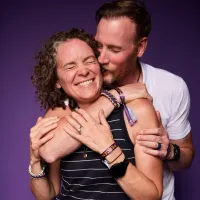
Meredith & Craig
Life partners, business partners, and best friends. We left the corporate grind to become fulltime entrepreneurs... with no idea what we were doing.
That made for some interesting, amazing, stressful, awesome, painful, scary, awful, awesome, insightful, unbelievable decisions, moments, experiences, relationships, and quite honestly, we wouldn’t have it any other way.
Our marriage is the foundation for everything else we build in our lives. It is a cheat code for life, and we believe that having that part dialed in levels up every other part of life.
We help others live their dream life... and that starts with a rock solid relationship so they can level up the rest of their lives too.
Tune in for a dose of laughter, love, a gentle ass kicking, and game-changing wisdom that will help you unleash your potential and build the life of your dreams together.
Subscribe to the Podcast


I really enjoy listening to these two share their experiences and stories. They always have an honest and lighthearted take, even if the subject is serious.
- Carrie
Charlottetown, PE
STOP SURVIVING.
START THRIVING.
Your Empire Deserves a Kick-Ass Marriage
Most people wait for a crisis to fix their team. We prefer Lead Indicators. Take 2 minutes to get your score and stop guessing where your relationship stands.

(Pro tip: It’s more fun than a tax audit, we promise.)
Not a quiz person? Grab the Winning Playbook instead.

Connect with us on:


© 2026 All Rights Reserved | Road of Life Coaching, LLC
PRIVACY POLICY | Terms and Condition
Custom Crafted By ExpertSites