The
200% Marriage
Podcast
With Meredith & Craig
The
200% Marriage
With Meredith & Craig
Subscribe to the Podcast



Listen
131. The Cure for Cranky Turd-ness (Chapter 10) | The 200% Marriage Podcast
Listen Now
Episode Transcription
You've built the business. You are crushing it in your career. You've scaled your impact, but are you winning at home? Welcome to the 200% Marriage Podcast. We're Meredith and Craig, and we're here to help you kill that domestic drag and turn your partner into your most elite teammate from Russian taxi mishaps to hailstorms on the summit, we're sharing the raw and real stories and tactical drills you need to move outta roommate Bill and into your 200% life. So grab your gear. It's time to build an unstoppable team. Let's dive in.
📍 Chapter 10. The cure for cranky turd ness. Be yourself. Everyone else is already taken Oscar Wilde. The commitment to yourself starts with knowing who you are because once you're clear about that, you can actually appreciate the super cool human you truly are. Knowing yourself sounds easy, right? Maybe for some, but not for me. And though he still isn't here at this moment, I still am going to speak for Craig, not for him either. Another note from Craig can confirm again, there was a time when we both struggled a lot with our identity. We didn't know who we were. We didn't know who we wanted to be, and it made us cranky turds. And nobody likes a cranky tur. When we left our corporate jobs to become entrepreneurs, we had no clue how much of our identity was tied to our corporate success. Who were we without the fancy office, the fancy job title, the fancy paycheck, not an easy question. And instead of answering it, we blindly jumped into a few businesses that, of course, failed miserably, and the reasons for that are obvious in hindsight. How can you build a business that creates a life you love? If you don't know what that life is, if you don't know what your gift is, if you don't know what you wanna offer the world, if you don't freaking know who you are or who you wanna be, it's basically impossible. That's what we learned the hard way. We needed to find answers to those critical questions and to find ourselves. Again. We found ourselves at a personal growth event battling our limiting beliefs. That's a sentence I never thought I'd say. I didn't know what a personal growth event was, let alone what a limiting belief was. Limiting beliefs are the thoughts that we hold that keep us from becoming the best version of ourselves. They prevent us from achieving our goals and dreams. They're based on deep rooted fears and events and experiences from our past. They're usually buried deep in our subconscious, so we don't even know that they're there. They're silently influencing everything we say and do every single day, and we all have them. If someone says they don't, they're lying to you or themselves. We're all basically wrestling with the same stuff. The details differ from person to person, but the principle is universal. We're all a little messed up and we're all in this together. At this particular conference, there was more than 600 of us battling our limiting beliefs that had been holding us back. Telling us that we don't deserve the things we want in life. Telling us that we're not good enough for the people, the life, the things that we want. You must understand that it's okay that you have limiting beliefs. There isn't a single person on this planet who doesn't have them. Tony Robbins, the most famous personal growth coach, author, speaker, on the planet, is the first person to admit that even he has them. You're not alone. We are not alone. See. We human beings are meaning making machines. We want everything that happens to make sense in our brains. So when something happens that we don't understand or that we don't have all the information about, or perhaps we're too young to understand, we give it our own meaning and context. We tell ourselves a story that makes sense of the thing that we don't understand. Maybe your parents split up when you were a kid and now you blame yourself for everything that goes wrong around you. Maybe a parent left the home or died and you blamed yourself and you believe you're unlovable, or you believe that everyone who loves you will one day leave you. Maybe you grew up getting praised for your grades in school, and now you believe you're only valuable when you're flawless. Maybe you grew up getting praised for all your goals on the ice or baskets on the court, and now you believe that you're only worthy of love if you win. Maybe you had an unfaithful partner now you believe you're not worthy of a loving relationship. There are lots of reasons we make up stories. The important part is to realize that it's something we all do, and when we make these stories up, we make damn sure we believe them. We convince ourselves that they're true because we really know how to line up all the proof to make ourselves believe them. And often we've been telling ourselves these stories for so long. They've just become a part of us. They feel like universal truths that we never question. It just is today we're gonna question them. We're gonna unravel those stories because the thing about these stories is if we invented the story, then we can uninvented it, rewrite it, delete it. You know what I mean? One of my many stories that I have since worked to Uninvent was that "I make bad decisions" whenever something in my life didn't go as planned. That was the story I told myself. So every relationship that didn't work out, every wrong person I dated, I filed under bad decision, by the way, wrong person, that's also a story. Every person I've ever known has taught me something vital. I needed all those experiences to become this version of me, but I digress. I bought into that story hook, line and sinker, and I could give you a thousand proof points for why it was true based on my life experiences. Some were small and insignificant, and some were real doozies. The point is, does it do me any good at all to believe the story that I make bad decisions? Does it serve me in any way to believe that? Of course not. It doesn't do me an ounce of good to believe that I make bad decisions and it's also not true. By the way, have you met my amazing husband? That was a freaking fantastic decision. Craig here. Who me? Amazing husband, ah shucks, can confirm. Fantastic decision. First ballot entry into the decision making hall of fame. That is all for me. Carry on. So if we make up stories every day, all the time, why don't we choose to make up stories that serve us? Wouldn't I have been better served for the decade or so where I really, truly believed that I made bad decisions? To think that I make fantastic decisions? Wouldn't setting a higher bar for myself make me more likely to make great decisions? Wouldn't having a story about being a tremendous decision maker create a self-fulfilling prophecy for me? Of course it would, and in fact it did, just not in the direction I wanted. Here's another thing. I had a really tough time believing for a long time. There's no such thing as a universal truth. If you and I were in the same room having a conversation, when we left and thought about that conversation later, we would remember it differently. We each experienced that conversation through the lens of our past experiences and the stories that we've created in our minds from them. We each experienced that conversation through a different lens. Like if I wear sunglasses with pink lenses and you wear sunglasses with amber lenses. You're gonna see an amber world and I'm gonna see a pink world. We're gonna see slightly different things because of the lenses we use to look at the world. It's the same thing with the stories in your mind. The stories are the lens through which you experience your world. They color what you see. This was a really challenging idea for me to understand for a long time because I believed that if someone followed me around with a movie camera all day, every day. Similar to the Truman Show. It's a movie from 1998 that I rented on VHS at Blockbuster. Back in the day, there would be one agreed upon set of facts. One universal truth we could all accept, but it's simply not true. We can all observe the same thing and see or experience different things. This lens discrepancy shows up in every relationship you have. Couples argue about what really happened. It's not necessarily lying or gaslighting. It's different experiences of the same moment. Often it gets worse when one person is talking about their feelings and the other person is insisting on talking about the facts as if facts are universally true. But there are no universal facts. Your feelings are valid. Their feelings are valid, and you don't need to fully understand each other's feelings to honor them. We end up tripping over our past experiences and our stories in our current relationships. That's what people mean by being triggered something in the present, a conversation, a decision, a word, a feeling, a smell, pokes at an old wound from your past, and you react as though that thing from your past is happening all over again ,right now, in real time. We all have triggers based on our life experiences and our stories, and it's not our fault. We didn't create the situations that traumatized us in the past. We didn't create the conditions that led to the stories we made up. Those events were not our fault, but once we become aware that we've written a story about it and are now reacting to that story, it becomes our responsibility to deal with it. The way you deal with it is by excavating the stories and the limiting beliefs you have about yourself that are holding you back. Dig them up, dust them off, take a close look, and then rewrite them. I had to excavate the story that I make bad decisions so I could stop subconsciously looking for ways to make myself right, because I definitely did not wanna be right about making bad decisions. But that's what our subconscious brain does. It's always on the lookout for ways to make you right, which is why we have to be really careful with the things we say to ourselves. Because our brains will try to make it happen. They'll try to prove us right over and over and over again. Excavating those limiting beliefs, and rewriting those stories isn't easy, but it's necessary if you wanna deepen not just your marriage, but your relationship with yourself. We've got a client who went through a tough breakup. It rocked her because at the time she thought she found her person. As the first anniversary of their breakup was approaching, she was understandably struggling with it. Her mind was telling her stories about that breakup, what it meant, what it said about her, and how hard it was all related to being unworthy of the love and relationship that she wanted. We helped her reframe that day, not as the day he left her, not as the day she had to start over, again, not as the day that she was unworthy of yet another relationship. Instead framed it as the day she was reborn. It was the day she began living life on her terms. It was the day she got to design her own life. The end of that relationship was a gift. That relationship and that particular guy were not meant for her. If they were, they'd be together right now in a loving relationship. Now that it has ended, she has the space to receive what is actually meant for her. We helped her assume a new identity complete with a new kickass name. She named her superhero identity born on that day. She bought in and really embraced it. She really believed, so she went all in. She got rid of everything in her life that no longer served her and just reminded her of the past. When she fully adopted this new story, she created a different energy within her. She exuded this energy. When she released everything that was holding her back, that was no longer meant for her, she created space for what was meant for her. And within a few weeks she bought a new home, her first home for herself. She met an incredible new person, someone with whom she could be genuine, honest, vulnerable, and feel safe. Within weeks, her whole life had changed. Starting with the story she was telling herself. That is the power of the stories we're telling ourselves and what can happen when we begin to rewrite them. Now to be clear, we are not saying that if you rewrite the stories that are holding you back right now, you can expect to find your new home and a relationship that lights you up within a few weeks. What we are saying is that if you begin to do the work of rewriting the stories that no longer serve you, you can make room for the stories and the things that do serve you that are meant for you. It's possible that it can take weeks as we just learned. It may also take longer. Either way, it's always worth that effort. One of the members of our mastermind tragically lost her dad suddenly when she was young, as you would expect. Her mom had a hard time with it. They both did. She's done a ton of work on herself to process her grief and loss, and it was incredible to watch her lean in and believe in her own self-Worth enough to do the hard work. Her mom, on the other hand, wasn't doing the work. As a result of all the work she'd been doing. She had a really emotional revelation about how her mom had been manipulating and gaslighting her since her dad had passed. That's not a story that paints her mom in the best light. It hurt her to have that story. And it was impacting her relationship with her mom. She was understandably struggling with it. She was working on holding boundaries with her mom and was doing a fantastic job. One thing we always try to impart to our clients is that most people are doing their best. That if they knew better, they'd do better. She was struggling to believe the story about her mom, that if her mom were able to do better for her growing up, and now, then she would, but her mom wasn't doing the work, so she couldn't do better. We helped her reframe the story that her mom was manipulating and gaslighting her for decades. By asking her a few questions to change the story: was it possible that by watching how her mom handled her dad's death in the immediate aftermath and in all the years since, that she had learned what not to do? That she became so strong and handled her loss and grief in the productive way that she did, because her mom taught her what the other way looked like? Had her mom not handled things the way she did, maybe our client would never have learned where it leads and therefore might have taken a similar path. Maybe she'd have a similar relationship with her children. Was it possible her mom had given her a fantastic gift that helped her become the powerful woman and amazing mother that we know today? Was it possible that she could be grateful for how her mom handled her grief? Because that was how she learned to be so strong. It was an emotional moment because it became so clear that all the things she was so angry at her mother for doing to her, then and now, were a gift to be grateful for. She has an incredible relationship with her children. It's possible that because of how her mom showed up for her, she showed up differently for her own kids. Would believing that story and showing up in gratitude for her mother serve her better, than choosing to believe that her mother wanted to manipulate and gaslight her for years? Of course it would, and that's the power that she has. She can choose to believe either version of the story, but one clearly serves her and the other doesn't. Either or both can be true. Only one serves her well to believe. It's not easy to reframe the stories we've been holding onto for years, if not decades. Decades, of telling yourself the same story don't just disappear because you told yourself a different version of the story one time. You have to be intentional about reminding yourself of your new story. She'll have to redirect her story back to the one where she's grateful for all the shitty things her mom did, because her default programming is to be angry about it. Every time you intentionally shift to the new story, you're not deepening the groove of that old story. You're creating a deeper groove for the new story, and eventually it will become your default. It's hard work. Acknowledge it, and know it can feel even more difficult when only one person in the relationship is willing to do it. Our client sees the value in rewriting the stories that no longer serve her, and she's working incredibly hard. We're extremely proud of her. Now let's go back to that first personal growth event Craig and I attended in Utah. 'cause that was the beginning of excavating and rewriting some of our individual stories. I still had a lot of them to rewrite. Starting with deleting the I make bad decisions. So fast forward to us attending another event in San Diego. At this stage, we had left our corporate jobs and we were trapped in a loop. What will we do? How will we do it? At that event, a woman took the stage and it felt like she was speaking directly to us. She said something to the effect of, you're asking the wrong questions. Stop asking, what should I do? And start asking, who am I? Her words hit me like a sledgehammer to my soul. It was so on point for our struggle in that moment. You can't help but think the universe put us in that exact right place at that exact right time to hear the exact message we needed. The takeaway from her talk was to come up with three to five identity statements about who I wanted to be. To define the person I want to be. That was the first time I realized that we get to decide who we become. I guess before this, I thought it was just all pre determined, like someone else decided who I was going to be and that I was who I was. It was set in stone. It sounds weird to say that now, but that's what I thought. This was the first time I realized that I get to decide who I am. Coming up with three to five I am statements wasn't easy and I felt like such an imposter when I wrote down: I'm a coach, I'm a speaker, I'm an author, I'm a rockstar business owner, none of which felt true yet. You'll notice that none of those Im statements I wrote down had anything to do with running. I definitely was not a runner, not a part of my identity. And in fact, saying I was not a runner is actually a huge understatement. I hated running. I was actively an anti runner. Running was the devil as far as I was concerned. This is essential context for what is coming next. I promise. Before this trip to San Diego, Craig had somehow convinced me to start running, a little. He wanted to run a marathon and thought it would be cool if I had a running goal too. Cool. I was down to set a running goal. I wanted to set a running goal of 10 K. I had never run 10 K before, and even the fact that I was actually running four or five K, a couple of days a week was actually mind blowing to me being the great teammate he is. Craig challenged me on more than one occasion. He said You could run 10 K tomorrow if you really had to. I think you could set a goal to run a half marathon. Let's just say I did not respond well to the challenge, any of the three times he made it. Inevitably I would get upset, tell him I didn't wanna run a half marathon. but the million dollar question was, why did his challenge make me cry? It made me cry because I knew he was right, because I was scared, because I didn't wanna declare a big goal and fall short. It was so far from who I thought I was, from the identity that I'd held onto for so long. Who would I be if I were a runner? Because I didn't think I was worthy of achieving a big goal. Because I was scared I couldn't do it. I was afraid of failure, so I stayed comfortable right where I was running four or five kilometers at a time. So while we were in San Diego for that event, we did a goal setting exercise, in which we were supposed to set big, hairy, audacious goals across different areas of our lives. One of those areas being our health. In that moment, something inside of me said in sort of a, you know, half resigned, half pissed off voice, "fine, I'll run a stupid half marathon." I wrote the goal down, I declared it, and it scared the crap out of me. We got back from San Diego and started training using the Nike running app, which is fantastic by the way. Those training plans consist of dozens of guided runs. Most are guided by the Nike Global running coach named, Coach Bennett. I shit you not. The Nike running coach's name is actually Bennett. So I've got Coach Bennett at home cheering me on and Coach Bennett from Nike in my ear while I'm actually running these training runs. Two of these guided runs hit me so hard that I still remember their lessons vividly to this day. I still live by those lessons because they're profound and they apply to every aspect of life, including running. I'm gonna do them in reverse order, and I'm actually gonna share the first lesson a lot later near the end of the book. We already hinted at it in the opening chapter. And I'll share the second lesson right now. The second lesson started with Coach Bennett saying that he spends most of his time in his role as the head coach for Nike running, convincing people that they're runners. because most people don't think they run far enough or long enough or fast enough, or often enough to be "a runner". And he said, he's here to tell you that if you're running, () which probably you are, if you're listening to a 30 minute guided run), then you're a runner. Period. Oof. That one hit me right in the gut. I was still saying every day to anyone who would listen. I'm not a runner. I just run a little. Even though I was running five days a week training for a freaking half marathon, according to Coach Bennett, and he certainly does seem like an expert, I could least based on his job title. I guess I'm a runner now. What that guided run taught me, is that most of us put conditions on our identity. I'll be a blank. Once I blank. I'll be an entrepreneur. Once I make enough money to quit my job. I'll start posting about my new business, once I have some testimonials, I'll believe I'm a great spouse or teammate. Once the world tells me I am. Bullshit. Own that shit. Now. Step into your greatness. Decide who you are, and then be that badass version of you. Which is what I did when I had to write those I am statements. I decided who I wanted to be. I defined my identity, the person I wanted to be, with those four identity statements, I am a coach. I'm a speaker, I'm an author. I'm a rock star business owner at the same event in San Diego -I know it was a big weekend for us.- The next speaker who just happened to be our friend, Greg, the same one who wrote the foreword of this very book. Told us to write down 10 truths about ourselves, and I'm not afraid, now, to tell you that I really struggled with that one. I couldn't come up with 10 statements that I thought were true about me. I could come up with two. And then after the event, I decided to let myself get aspirational and ended up writing down 12 statements I wanted to be true about me. Those 12 statements became the traits and attributes of my new identity, the version of me I wanted to be. Do you know what the very first truth slash attribute slash trait I wrote down was? I make great decisions. For four years now, I've been journaling those four identity statements and those 12 truths. Every. Single. Day. The reason I write them down every single day is because it reminds me of who I am becoming, of who I am. By writing them down every day, they stay front of mind for me. Then when I'm inevitably faced with a decision or an action that day, the version of me who I wanna be, is front of mind, and I'm more likely to act in accordance with those statements. And every time I do act in alignment with those 12 truths. I'm giving myself more check marks in the proof column that I actually am that person. I'm actively rewriting the old stories that didn't serve me into new stories that do serve me, and eventually I started to believe them because I embody them. Every time I do something extraordinary where I show up as that version of me and I feel like a badass, I write it down. I write it in my badass book. My badass book is a collection of things I've done that make me feel like a badass. That make me feel like a superhero. That make me feel like I am the highest and best version of me. And then when I inevitably have a day where I'm feeling like a less than badass version of me, I go back and read my badass book and it reminds me of what a freaking badass I really am. It reminds me of who I am becoming. So this is the part where I'm gonna ask you to call forth your inner badass. Your inner superhero. We all have one. That version of you who does the hard thing, who believes in you, who won't give up, who already has the marriage you wanna have, what would that superhero version of you say? What would they do? What would they prioritize? Maybe they'd say, I have a kick-ass marriage. I'm a great teammate in an amazing marriage. Try those on. How do they feel? If they fit? Write them down if they don't, try a few other truths on for size. Give this superhero version of you a name. A name free of baggage. A name that makes you feel unstoppable. Now, ask yourself, what does this superhero version of you do daily to have that kick ass marriage? Do they kiss their teammate every morning? Do they put their phone away during quality time? Do they do the small things that make their teammate feel seen and appreciated? Write a list of 10, or more, traits that this superhero embodies and habits that they do every day. We start by creating the identity of someone who has the kickass marriage because it's so much easier to set goals and change behavior when you already own that identity. One more thing, every time you do something on that list you just made, celebrate it. We talked about this at the beginning of the book, and I promise it's gonna come up again and again. Celebrating is important. We don't celebrate our own shit enough. Every time you do something that the superhero version of you would do, you are becoming the superhero version of you. It's proof that you're becoming that version of you, and that's fucking cool. Celebrate that. I know it might seem silly to celebrate something that seems so small. I struggled with celebrating small things, and big things for that matter, for a long time. Celebrating is exactly how you get into and stay in momentum. And momentum is how you bust through any obstacle in your way. Momentum is huge. Celebrate. And that is chapter 10. Chapter ten's, the long one. Chapter 10 is a doozy. Chapter nine is the shortest. Chapter 10 is the longest, I believe. Close to right up there. Right up there. A lot to unpack there, macKay. Yeah, that was a heavy, heavy, heavy chapter. There was a lot going on. But anyway, it sets the foundation right, like we talked about in chapter nine of like introing, this whole section of the book around the relationship with yourself and it being such an undervalued and overlooked aspect of relationships because the relationship you have with yourself is the only one you have from cradle to grave. It's literally the most important relationship in your life above any relationship, including your teammate. So if you don't have that right, no other relationship is gonna get dialed in. Mm-hmm. So it's critical that, you know, you dive into this and, you know, we opened up and you were talking about how like, like knowing yourself is, is really hard. Mm-hmm. And, and like, you know, losing identity and not having identity and our whole experience of, you know, struggling with that when we left corporate, because. Our lives to that point were our, our identity was closely tied to what we did. Yeah, totally. And, and how we struggled kind of through that. And then, you know, San Diego came that, that, that, uh, retreat or that event really came at the right time for us. Yes. Oh my gosh. It's interesting because those, we talked about two events in this chapter. The first one being the Utah Limiting Beliefs, and then San Diego being more the identity focused. Event and they happened, I don't know, a month or so from each other. Probably. Yes. And we'd never really been to a personal growth event in our lives before. And then like boom, had two big ones almost back to back. Yeah. And so that first one, you know, we didn't get, get into a lot of the details on, on the activities we did at that event from like it's come, I think. Okay. In the book busting through wood with our palms and breaking arrows and all the things. we both identified a similar underlying belief around not feeling good enough and not feeling worthy. And that was the first time I really was consciously aware that I held that belief and it was holding me back. And then learning to unpack some of those stories, because talking about the, you know, the, the, the joke around the Truman Show. By the way, VHS at Blockbuster, you are old and you just turned, it was just your birthday recently. Yeah's true. I'm my mid forties now. You're really old now. I know. Blockbuster, like pe, vhs. This, this book LA like, I mean, it's out there now. People who read this in like 20, 30 years are, it's gonna be like a different language to them. Totally. Be kind. please rewind, BHS and Blockbuster. Like, what, what are these things? But I, I legitimately thought that if someone followed me around with a camera. That if you and I got into a disagreement with something that happened, we could just go to the video evidence and then I would be proven right? Or you would, right? Yeah. Well you would, you would definitely point to the video and say, see here, right here is exactly where this happened. Yeah. And I'd be like, I see something completely different Correct. Because we can both see the ex, it's why eyewitness testimony, so unreliable. We can both see both, see the exact same thing and experience the exact same thing. But experience it differently. Interpret it completely differently. Correct. So it's not like one of us is right or wrong. It's not like I'm trying to gaslight you or you're trying to lie to me. We just experienced it differently. That's why when someone's like, no, we gotta talk about the facts. It's a bit of a mind. It's a bit of, there are no facts. It's a bit of a mind fuck. It is a complete mind fuck. It took me not so long. There's two concepts in this chapter that took me so long that were so hard for me to wrap my brain around. And that's the first one, that there is no agreed upon reality. Like I called it facts, but really it's reality. There's no. Objective, impartial. We can both agree that this was the reality of a situation because we both experience it through our own lenses of our own experience there. Really, when you think about it, there is really no reality. No, it's all subjective. It's everything is subjective. Subjective. And that is, that was such a hard concept for me to wrap my brain around. And the second one is that everything we experience is based on the stories we make up in our brain. So why wouldn't we just make up stories that serve us? And that struck me as so woo woo and so foolish that like no things happen because of, I don't know what, just the way life happens, things happen. It's got nothing to do with what I think. It's got nothing to do with the stories I tell myself. But when you tell yourself a story, you looked to prove that story, right everywhere you go, subconsciously everything you do, you're trying to prove yourself, right? So when you make up stories that are shitty, you're trying to prove them right all the time. Why wouldn't I try to make up stories that would serve me so that every time I look for proof points, it's actually actively making my life better? That was such a hard concept for me to wrap my brain. So there's two concepts in this chapter that were so hard for me. Mm-hmm. You also talked about gratitude and like gratitude for the hard thing. Mm-hmm. Like the hardships. Mm-hmm. And I was just listening actually, to a podcast and Tony Robbins is on there and he was literally saying, um, how he grew up. His mom was alcoholic and there was some physical abuse and like he grew up poor and didn't have food and all the things, and then he had this, this, uh, thing happen to him. This, this person came to their home at Thanksgiving or Christmas or something to give them food because they just didn't have any. And he remembers that when he was a kid from that moment. He just remembers that that worst moment of his life of not having food for Thanksgiving and then having it. Then when he was 17 years old, he went and donated a bunch of food and has been doing it for like the last 50 or 60 years and has served like 8 billion meals across his lifetime or something. And how he, he says, go and make your worst day, your best day. Like make the worst of your life. The worst moments, like in the moment where it felt like really shitty, really hard, really bad, to take that, use it for good and make it like, have gratitude for it, even though it feels like shit in the moment and it sucks and it feels like you get kicked in the gut. Yep. Gut. That's where I was going. Uh, you can really leverage that and turn it into something positive and make it the best moment of your life. So just have that gratitude. I think for me, one of the biggest lessons out of all of this has been gratitude and look for the good and really appreciate. The life that you've had, even the hard parts because it got you where you are, which is gonna get you where you wanna be, becoming that version of you. Mm-hmm. The old me never really appreciated that. No, me neither. Going back to identity like you talked about running. Yeah, well, the whole concept and identity, I guess this was the third thing that I really struggled to, to learn during this whole journey is that I get to decide who I am. I don't know why I thought it was predetermined or someone else decided. I don't know why it was just, you are who you are. . We don't know what we don't know. And so I'm with you, I, I always felt like, um, I was born with a certain set of traits and certain way of being, certain of skills can make you disappear. Uh, and certain way of being, and, and that's just who I am. Mm-hmm. It's just the luck of the draw. It's like, it's just a, a lottery almost at birth. And it's like, Hmm, okay. Interesting. So I, I actually, okay, cool. Yeah. I defaulted to this. Actually, I didn't choose this. Yeah. I just defaulted it, based it on upbringing, beliefs from my parents. Social conditioning. Yeah. Things that I heard in school. So it's, it was a revelation to me to understand that I get to decide the person that I wanna be, and then I just be that person like. Who do I wanna be? Those three to five Im statements who, what, what do I, who do I wanna be in this world? And how does that person show up? And you chose runner Good for you? No. Well, eventually, yeah. No running chose you. It's a funny story and I love it as a, as an analogy for this because. Like I said, I was an anti runner. I thought running was dumb. I hated running like it was like blah. I ran, why would anybody do this? Right? I ran like when I was 16, I went for a run for like two kilometers once, and I was like, I'm never doing that again. I hate this. Like, no, I'm over this. And then the challenges and then finally setting the goal to do the half marathon and even running five days a week. Still like, oh no, I'm not a runner. I just run a little like I what I love most and we didn't even, we didn't put it in the book, and I don't know if it's in the book. I don't think it's in the book anywhere. What I really love about this lesson is this, coach Bennett actually said the exact same thing that that Coach Bennett said to you about running. I can remember vividly being on a run. You saying, I'm not a runner, and I'm literally telling you, you're running literally right now. You are a runner. If you're running right now, you're a runner. But nobody trusts a prophet in their own backyard. No. You had to hear from the other coach Bennett. Yeah. And admittedly, he's a gr He's a great, he's a great coach. He's, he's awesome. And I love, 'cause he is a, I can't listen to a run, a guided run from Coach Bennett and not take a, like a nugget that's like, oh, that's so good. We can use that in a relationship call. We can use that in a podcast. We can, it's, it, I, I find running to be such a good analogy for life. It's a microcosm of the journey that you take through life. Like some days are harder than others, some runs are harder than others. Some runs make you question everything and it just, you need to just grit, just get through it and it's, it's like life and sometimes it's, it's a, it's a great run and the wind's at your back and the sun is shining and it's just the perfect temperature. And life can be like that. And it's just the things that you go through on a run. It's a mental grind. It's tough. That's, that's what you, that's what you get through life. And it's like what Coach Bennett says, this is about running. This is also not about running. It's about running, but it's also not about running. Yeah, totally. Um, and then back to your identity thing. You know, you, you talked about, you just get to choose. Mm-hmm. You, you can just decide in a moment. It's a simple choice and it, it's like it's become the person that you want to be and then do the things that that person would do, and then oh, lo and behold, you have the life that, that, that person would have that, that you want. So it's like that be, do, have that we've talked about several times that just reinforced through the book and how you know, you it, we always think that. When we have the thing, that's when we will, we'll become the person. Mm-hmm. I know, but we always have it backwards when we Yeah. You have to become the person and then do the things that person does to have the things that person would have, and we just, just barely glossed over It. Just touched on it, but the whole, the beauty of starting with the, the identity and, and who you wanna be and the becoming, like Be plus do equals have, you gotta do the Be first. But the, the beauty of that is that. When you go to, to, to do the things like we're talking about the, the identity and the becoming, and then we'll get into the, the things that you do throughout the rest of this book. But trying to change your habits is hard. Trying to introduce new habits is hard. Mm-hmm. And there's lots of books, lots of research, but one of the best books on it is Atomic Habits. And he talks about in that book that when you're trying to change a behavior, trying to change a habit. There's three different ways to do it. And the most successful way of doing it is by adopting identity first. So let's say you're trying to quit smoking and someone offers you a cigarette. You don't say, oh, I'm trying to quit. 'cause that's behavior-based change. It's the first one you try. You say, I'm not a smoker that's identity focused. The three is like, if someone offered you a cigarette, you, you could say. I'm, I'm, I'm trying to quit smoking via the first option, the first version, and, and that's the least effective. Mm-hmm. And then it's like, oh, I don't smoke. Mm-hmm. I don't smoke is the, you know, I don't do that action. Mm-hmm. Which is, um, action oriented or something, but it's the second version and it's mildly more successful than the first, but it's not near as successful as the third option to your point of. I'm not a smoker. It's identity focused. You've taken on the identity of someone who doesn't smoke. So anytime a decision comes where, you know, you're tempted by something, you're temped, someone offers you one, or there's a pack laying around or whatever, you just, you lean into the identity. I'm not a smoker, it's not a thing for you anymore. And that's how people get through changing habits, uh, quicker and harder. So we, we. Didn't get into that in any great detail. I don't think we do anywhere in this book, but if you are looking at changing habits specifically and wanna dig into this a little bit more, atomic Habits is a fricking fantastic book and he explains it in a a lot of detail and makes it really easy to understand that by changing your identity first and adopting the identity of the person you wanna have, who has the thing you wanna have? Who has the great marriage, who has the great health, who has the whatever? Adopt that identity first and it makes adopting the habits so much easier. So that's chapter 10. Chapter Eleven's coming up. What's the title of chapter 11? Chapter 11 is called, do you like Star Wars? Do you like Star Wars? So we're gonna talk about Star Wars in chapter 11. See you next time. Bye. If today's episode gave you a new lens for your relationship, don't let it stop here. The best teams never stop training on Thursdays. We drop the Unstoppable Team Newsletter on LinkedIn. It's our high performance briefing. Designed to give you one tactical drill. You can run with your teammate over the weekend. So just search Meredith and Craig on LinkedIn or click the link in the show notes to subscribe. Get the briefing, kill the domestic drag, and we will see you next Tuesday.
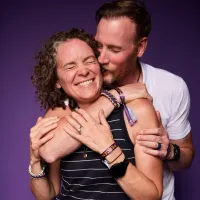

Meet
Meredith & Craig
Life partners, business partners, and best friends. We left the corporate grind to become fulltime entrepreneurs... with no idea what we were doing.
That made for some interesting, amazing, stressful, awesome, painful, scary, awful, awesome, insightful, unbelievable decisions, moments, experiences, relationships, and quite honestly, we wouldn’t have it any other way.
Our marriage is the foundation for everything else we build in our lives. It is a cheat code for life, and we believe that having that part dialed in levels up every other part of life.
We help others live their dream life... and that starts with a rock solid relationship so they can level up the rest of their lives too.
Tune in for a dose of laughter, love, a gentle ass kicking, and game-changing wisdom that will help you unleash your potential and build the life of your dreams together.
Subscribe to the Podcast


I really enjoy listening to these two share their experiences and stories. They always have an honest and lighthearted take, even if the subject is serious.
- Carrie
Charlottetown, PE
STOP SURVIVING.
START THRIVING.
Your Empire Deserves a Kick-Ass Marriage
Most people wait for a crisis to fix their team. We prefer Lead Indicators. Take 2 minutes to get your score and stop guessing where your relationship stands.

(Pro tip: It’s more fun than a tax audit, we promise.)
Not a quiz person? Grab the Winning Playbook instead.

Connect with us on:


© 2026 All Rights Reserved | Road of Life Coaching, LLC
PRIVACY POLICY | Terms and Condition
Custom Crafted By ExpertSites