
The
200% Marriage
Podcast
With Meredith & Craig
The
200% Marriage
With Meredith & Craig
Subscribe to the Podcast




Listen
145. Sand In Your Underwear (Chapter 24) | The 200% Marriage Podcast
Listen Now
Episode Transcription
📍If you want more sex, because a lot of dudes, that's their chief complaint is we don't have enough sex.
100% responsibility let's look at why that is. Mm-hmm. Have I set up a situation in a relationship where that person wants to have sex with me? Have I been emotionally , transparent? Have I shared the shit that's going on with me?
Have I created a safe space where they feel safe to share the shit that's going on with them?
We really could boil it down: if you want more sex, create a space for her to feel safe to share emotionally.
You've built the business, you're crushing it in your career, you've scaled your impact. But are you winning at home?
Welcome to the 200% Marriage podcast. We're Meredith and Craig, and we're here to help you kill that domestic drag and turn your partner into your most elite teammate.
From Russian taxi mishaps to hailstorms on the summit, we're sharing the raw and real stories and tactical drills you need to move out of roommate-ville and into your 200% life.
So grab your gear. It's time to build an unstoppable team. Let's dive in
Welcome back to another episode of the Two Hundred Percent Marriage podcast with Meredith and Craig. I know you've been paying attention. I know you've been following along. We've been reading the book, The Two Hundred Percent Marriage: Your Winning Playbook to Be an Unstoppable Team, written by yours truly, Meredith and Craig.
We're each reading the chapters we wrote. We're on chapter 24, Sand in Your Underwear, written by none other than Meredith MacKay. Let's go. Get after it.
All right. Chapter 24: Sand in Your Underwear. "Love is an irresistible desire to be irresistibly desired," Robert Frost Is this the sex on the beach chapter?
It is not. Completely impractical, by the way. It is the intimacy chapter, though. It is the intimacy chapter, though. Now, you might be thinking, "All right, let's talk about sex, baby. I don't need the beach." Or maybe you're thinking, "Yes, let's talk about feeling closer and emotionally safe with each other." Both of those takes are reasonable.
Generally speaking, and I'm talking very broad strokes here, there are plenty of exceptions, men tend to approach intimacy from the outside in, and women tend to approach intimacy from the inside out. Meaning, men often use physical closeness to feel emotionally close to their spouse, while women often need emotional closeness before physical closeness.
Basically, for men, physical intimacy is often the prerequisite for emotional intimacy. For women, it's the opposite: emotional intimacy is often the prerequisite for physical intimacy. Obviously, this difference can cause friction. The good news, though, is that both are required for a happy, healthy, connected relationship.
So regardless of which comes first for you, they both matter. And the great news is we're gonna cover both. This chapter will dive into the emotional side of intimacy and some physical intimacy that isn't sex. Before you boo us, we'll cover the sex stuff in chapter 69.
Just kidding. It's chapter 29. Had to do it. Craig is rubbing off on me. The sex talk is in part five, the commitment to fun, because, you know, sex and fun go together like PB and J. But don't jump ahead. Keep it right here. We're still gonna have some fun right now, and it all starts with superpowers.
When you were a kid, did you wish you had a particular superpower? Maybe invisibility, maybe the power to fly, maybe even mind reading. Most of us think mind reading is a superpower. It's not. As cool as I thought mind reading would be as a kid, I now realize it would be a disaster. We think millions of thoughts a day, many of which are not an accurate reflection of who we are.
Random ideas we'd never act on, moments we're not proud of, passing noise. So someone who could read our minds wouldn't actually understand us any better. And yet we expect our teammate to read our mind. We think if you love me enough, if you knew me well enough, if we were in sync enough, then you should just know what I need.
I shouldn't have to tell you. On top of that, actually telling your teammate what you want can feel about as comfortable as sand in your underwear. So we often subconsciously expect them to just know.
Let's set the record straight once and for all. Mind reading is not a superpower, not in life and definitely not in relationships. Expecting mind reading is setting your teammate up for failure. What if, instead, you just told them what's going on?
What if instead you just told them what's going on with you? You told them what you need. You told them what you want. Because here's the really fabulous news. There is a superpower for your relationship, but it's not mind reading. It's vulnerability. Vulnerability is literally the key that unlocks every kind of intimacy in your relationship.
Now, I say lead with vulnerability like it's easy. It's not. Vulnerability is hard. Most of us didn't grow up with role models for it, so we have to learn it as grownups.
Researcher Brene Brown, we'll just call her the authority on vulnerability and an absolute badass, defines vulnerability as risk, uncertainty, and emotional exposure. Any time you share something that feels risky, uncertain, or emotionally exposing, you're being vulnerable. Most of us were taught that vulnerability is a sign of weakness.
In truth, it's the opposite. Vulnerability is courage in action. Would a weak person bare their heart not knowing how the other person would respond? They would not. Would a weak person share something raw and personal to help someone get through something difficult? Hell, no. Vulnerability takes massive strength.
Of course, what feels vulnerable will look different for everyone, and what feels vulnerable for you will shift within the same relationship over time. If you remember back to chapter eleven when Craig and I first met, he asked me whether I liked Star Wars. At that stage in our relationship, that was vulnerable for me.
He doesn't even remember asking. I remember exactly how I felt when he did. My chest tightened, my stomach churned, my brain spiraled because saying, "I don't like Star Wars" felt risky at that stage. That might seem silly or trivial to you. To me, in that moment, it was not. I was afraid of rejection, so I felt a lot of uncertainty revealing my dislike for Star Wars.
That tiny moment was vulnerable, and it's why I remember the moment so clearly and why Craig doesn't remember it at all. He wasn't being vulnerable. I was. He didn't know until years later that it was a vulnerable moment for me. Today, my surface level preferences do not feel vulnerable to me in our relationship.
What feels vulnerable to me in our relationship has changed, but the fear of sharing something vulnerable remains. One day, we were hiking in Arizona. Craig, AKA a sure-footed billy goat, bounded down the steep trail with his usual confident, laissez-faire attitude and loosely tied shoelaces. Meanwhile, I struggled to keep up, especially downhill and when I'm tired.
The further he pulled ahead, the more pissed off I became. Doesn't he see I can't keep up? That I might actually hurt myself? I did try to reason with myself and the stories that my brain was making up. I knew logically he wouldn't run down the mountain, hop in the truck, drive away, and leave me there.
I tried something our friend Brian Bogert suggests. I tried tracing the physical sensations in my body. Instead of labeling emotions, I focused on the physical cues in my body. I had to pay really close attention to identify the sensations. My heart raced, my stomach tightened, my shoulders tingled. Then something amazing happened.
The source of all that frustrated energy popped into my head like a bolt of lightning. My subconscious brain decided in that moment to let me in on the secret. I was terrified of abandonment. I tried to talk myself out of it, I tried to explain it away, but it just rang true for me. I couldn't shake it.
That's when I saw Craig nearing a large, slow-moving group. If he passed them, I'd never catch up, so I pushed harder, picked up my pace, and then tripped, face-planted hard. Scraped leg, bruised face, total scene. I must have made some noise, because Craig turned around and came back for me, and we made our way down the mountain more slowly.
All I could hear in my mind was that revelation: I have a fear of abandonment. I knew logically that Craig wouldn't learn about my fear of abandonment and promptly abandon me, but it still felt scary to tell him about it. It felt vulnerable to share this fear with him, but I knew I needed to tell him for two reasons.
One: He needs to know about it so he can help me try his best not to trigger me and support me when I am feeling triggered. Secondly, everything I decide not to share with him adds a brick in the wall between us. The more bricks in that wall, the stronger it becomes, the more it separates us.
I didn't want a wall between us. I didn't even want one brick between us. So the next day we were out for a walk, and I told him. Even though I knew he loved me and would support me, I still felt fear, uncertainty, risk, and emotional exposure when I shared it. But now that he knows, he supports me, encourages me, believes in me, and has helped me process it, work through it, and put it behind me.
Bottom line, we're closer because I shared it. I want to take a moment and acknowledge that vulnerability is hard. Being vulnerable feels awkward, scary, hard, uncomfortable, all the things. And everything worth having lies on the other side of awkward, scary, hard, and uncomfortable. Vulnerability is like a muscle.
The more you do it, the easier, not easy, but easier it becomes. To make vulnerable conversations just a teeny bit easier, here's a little vulnerability hack. Go for a walk. When you're facing someone directly eyeball to eyeball, it can feel more intense. It can feel like more pressure. When you're walking side by side with a view, space to breathe, acceptable moments of silence, it feels more natural.
Pauses don't feel awkward. They feel reflective. Walking slows your reactions, gives you space to process, and helps you respond productively rather than to react emotionally. Another example of a vulnerable conversation that almost every single couple can relate to is the first I love you conversation.
Someone has to say it first. Pure risk, pure exposure, peak vulnerability, and yet we do it. That's something to celebrate. And that's precisely the courage you need to channel for every vulnerable conversation. Here's Craig to get vulnerable and share with you the story of our first I love you.
We'd just finished dinner at a restaurant in downtown Denver. Next up was a Nuggets game. We had different opinions on how to get to the stadium, the dreaded directions disagreement. We are both also, by default, a tad stubborn. We both tend to have a little, "I'm usually, maybe not always, but almost always right," attitude.
It's taken a lot of growth from both of us to get past this and focus on being happy over being right. But this was before that growth. Mer's convinced we are better off going one way, and I'm telling her it's not the way. I know the way. Spoiler, neither of us actually knew the way, and neither of us was going to admit it at this point.
We were dug in and committed to proving the other wrong. So she went the way she thought, and I went the way I thought. To be very clear, this is not my proudest moment. I would never have let her walk alone in an unfamiliar city before. I was clouded by the desire to be right. It was a bad decision, one I would never make today.
But we set off to prove the other wrong. By now you might be asking yourself, "I thought they said this was an I love you story. It seems more like a stupid breakup story." Chill. I'm getting to it. As I made that walk lonely and annoyed, I began to really contemplate what was happening. I realized that this is incredibly stupid.
This disagreement means nothing in the grand scheme of our relationship. Who cares who's right or wrong? I realized that she was more important to me than being right. I began to ask myself, "What if something happened to her right now because you needed to prove you were right?" I would never forgive myself.
I realized how important she really was to me. I realized that though neither of us had ever said it out loud to each other yet, I love this woman. I need to tell her. So I called her. No, I didn't say I love you for the first time over the phone. Though with the way I was acting that night, I can see how you might have gone there.
I asked her where she was so I could find her. We met up and walked the rest of the way together. We were both a little quiet. We were waiting in line to show our tickets for the game when I leaned in and whispered, "I love you." Her eyes welled up with tears. She looked at me and said, "Yeah, but I was right."
Just kidding. She said, "I love you, too." It was a great moment. Best words I ever heard. A core memory for life. We hugged it out, and we went back to being us again, but a deeper, more connected us. That was incredibly vulnerable for me, not only to admit that I was being an idiot, but to say I love you first was huge for me. I was still guarded and very protective of my heart because of my previous relationship. That disagreement really put things into perspective for me and allowed me to let my guard down and be vulnerable. When I did, things changed. We grew closer. That's when I began to realize the power of vulnerability.
Lean into vulnerability. Like Mer said, it's a superpower for growing your connection. You cannot have true intimacy without vulnerability.
When your teammate shares something, anything with you, your response determines whether they'll share something with you again. If you validate their feelings, they'll feel seen and heard, and feel safe to share more with you. Each time you dismiss them, you're adding a brick in the wall between you.
Stack enough bricks, and before you know it, you have a wall of disconnection between you. Let's look at an example of validating and an example of dismissing in action. Your teammate shares that they feel left out because some of their friends went to lunch without inviting them.
You can't see why they'd be disappointed, because if you were in that same situation, you'd feel relieved to have the extra time to tackle your ever-growing to-do list. So you respond with, "Be grateful for the extra time to do other things. Plus, you couldn't go anyway." That's dismissal. This is how that response sounded to your teammate: "you're wrong to feel how you feel." Nobody keeps sharing when they're made to feel wrong for their feelings. Instead, you could say, "I'm sorry. I can imagine that doesn't feel very good." That's validation. It's that simple. Put yourself in their shoes. That's empathy. Empathy creates safety. When someone feels seen, understood, and safe, they're more likely to share more with you.
More sharing equals more intimacy. When someone feels seen, understood, and safe, they're more likely to share more with you later. More sharing equals more intimacy. And validating becomes easier when you regulate your emotions.
Regulating your emotions simply means you manage them. You manage your emotions instead of letting them manage you. Remember the chitchat story from chapter 20? I felt triggered. I could have reacted emotionally and lashed out at him. "What do you mean by chitchat? Are you dismissing me? What makes you so important?
Who made you king of important conversations?" Then he likely would also have been triggered and reacted emotionally, and then we stack emotional reaction on top of emotional reaction on top of emotional reaction until eventually we have an emotional explosion and feel completely disconnected from each other.
Reacting emotionally looks like snapping back instantly, raw and unchecked. It usually makes things worse. Responding productively means pausing, breathing, speaking with intention instead of reactivity. Craig chose to respond productively by leading with curiosity and asking me questions instead of reacting emotionally, saying something like, "Those are literally the exact same words you always use, you dingbat.
Only you get to say certain words now? What's your problem anyway? By the way, he would never call me a dingbat even if I was acting like one. For illustrative purposes only. By calmly asking me questions, he got me to realize, without telling me, that chitchat is the term I always use, so it only makes sense he would use it, too.
We had a productive conversation instead of an emotional reaction that would have eroded trust and emotional safety in our relationship, all because he managed his emotions in that moment. Emotional safety and vulnerability are the foundations of emotional intimacy. For many, emotional intimacy is the bridge to physical intimacy.
Contrary to popular belief, physical intimacy isn't just sex. We are gonna talk about sex. Be patient. It's coming. Physical touch builds intimacy, too. That looks like hand-holding. Not a big tool in our arsenal, to be honest. Shoulder squeezes; I see you, I'm here. Couch cuddles whenever we're relaxing and watching something.
Bum taps, personal favorite of ours. Foot rubs and toe tugs, personal favorite of mine. Massages, both of the clothed and unclothed variety. Hello. Here's why physical touch is so important. Physical touch releases oxytocin, the love hormone, the connection hormone. It builds feelings of trust, love, safety, and closeness.
Fun fact: hugs lasting 20 seconds or longer trigger oxytocin, lower stress, and improve your physical health. A six-second kiss does the same thing. Pick your favorite, do both, mix it up. It's like a built-in reset button. One 20-second hug or six-second kiss can shift the tone of your whole day. We're big fans of prescribing at least one 20-second hug a day for your physical health, emotional health, and the health of your marriage.
So grab on, hold tight for 20 seconds today. Bonus points if you lay a big, juicy six-second kiss on them, too. Just tell your teammate it's science you learned from these two randoms in a weird relationship book. You've got this.
And that's 24
That's chapter 24. Thought-
Sex and in your underwear ...
thought we were going sex on the beach chapter.
It's not.
Nope.
But- Not yet ... hey, it's coming. The sex part, not the beach.
No.
Anyway, a big, big emot- emotional intimacy chapter, though. Yeah. Vulnerability. Um, I do like what, what you said towards the end, w- um, vulnerability and emotional safety is, uh, equals more emotional intimacy.
Mm-hmm.
And then when you link that to women need emotional intimacy first before physical intimacy-
Mm-hmm
so literally what that means is, for all the dudes out there, like me-
You're translating, yep ...
is, uh, vulnerability and emotional safety equals more sex.
Mm-hmm. That's true.
Like, I, I, you want more s-
It, it is that simple ...
if you want more sex-
Make her feel safe, like, like, so that she will share more with you, and be vulnerable with her
and share s- stuff that's going on with you ...
share, share your shit that's going on with you, let her share her shit going on with her, and you will have more sex.
And then your naughty bits will touch.
Period.
That's w- how that works.
Yeah
If you want more sex, uh, because a lot of dudes, that's their chief complaint is we don't have enough sex.
Mm-hmm.
100% responsibility and 100% responsibility is let's look at why that is. Mm-hmm. Have I set up a situation in a relationship where that person wants to have sex with me? Have I been emotionally s- uh, transparent? Have I shared the shit that, and been vulnerable and shared the shit that's going on with me?
Have I created a safe space where they feel safe to share the shit that's going on with them?
Validated their feelings.
And then if you've done those things, check in on the hygiene side of things. Like, like- Have a
shower ...
like have a shower, brush your teeth, all the things. But if you're doing that, then check in on the emotional safety.
Have you created that situation in the relationship where they feel safe to share with you, and are you sharing with them? And by you sharing with them, you actually create a safer space for them to share with you.
Correct. So really, I think, like, w- we really could boil it down all. If you want more sex, create a s- a space for her to feel safe to share emotionally.
You do that by sharing emotionally yourself. You do that by validating her emotions when she shares them. You don't have to agree with them. You do not have to agree with them. You just have to have a little bit of empathy to say, "I can imagine that must suck. I'm sorry." Like, literally, that's all you have to do.
Mm-hmm. And you have to respond productively and not react emotionally. And,
uh- And then- And that- ... you'll have more sex than you can handle ...
and like the responding productively instead of reacting emotionally, I'm not sure if that's harder than being vulnerable yourself. I don't, I don't know. It's gonna vary for everybody, but that is hard.
It is hard not to respond emotionally, 'cause the emotions are bubbling up inside of you, and they come out your mouth and your eye roll and all the things. And the minute they do, you're fucked. Like-
Not the way you were looking-
Not the way you wanna be ... not
the way you were looking for.
The way that she feels, the other person feels unsafe and are unlikely to share with you again.
And
thank you.
And, and
once you damage that, it's really hard to come back from. You have a lot of work ahead of you to g- It's not impossible- ... to undo it ... but it's
hard.
But, but the more, the more you make them feel unsafe when they share, use those vulnerabilities, uh, uh, as weapons against them, the, uh, it just erodes it, and it's really hard to come back from.
Mm-hmm. So-
Less sex ...
responding productively almost always requires a deep breath first. Like, before you say or do anything, breathe in and then breathe out, and is this gonna create a safe environment emotionally for both of us? If the answer is no, don't fucking say it.
But vulnerability is the key to emotional intimacy, which is what women need.
And so, like, the, the, the key to this whole chapter and, uh, the biggest takeaway is that, uh, intimacy is both emotional and physical, and we're gonna get to the physical side momentarily in a few chapters. Hmm, but the emotional side is super, super important for half of the people out there, 50%, you know? Um, and so we really need to dial in and make sure that that emotional connection is happening so that we can get to and- Have the best physical connection possible
Yeah.
So let's talk a minute about vulnerability because it's so fucking hard, and how most of us grew up believing vulnerability is weak, which almost makes me laugh out loud. Because if vulnerability was weakness, then wouldn't it, everyone just be able to do it if they wanted to? Like, vulnerability is hard.
It takes a lot of courage. It's not easy. It can't possibly- I also- ... be weak ...
I also think that a part of that is that it's justification for not doing it.
Mm.
It's a way to get out of it, is like, if you can, if you can present it as, "Oh, that's weak. That's why I don't do it," then it just becomes easier to not do it.
It's an
excuse.
Yeah. It's
an- 'Cause that's, you're full of shit if that's what you believe ...
it's an excuse to get out of it. Uh, but, but also we are conditioned as-
Mm-hmm ...
as, you know-
Especially as men ...
yeah. That... But, but probably coming from men who didn't- Mm ... wanna be vulnerable.
Mm-hmm.
And saw it as, like, a weakness and, like, no, masculine men don't do that.
Well, masculine men that like sex do.
Yeah.
So- Which
I think most masculine men do.
J- I, I would think so. Mm. I mean, I do.
Speaking from experience. Um, but I, I do think it's more of an excuse.
Mm-hmm.
I do think it's something that you're told early on, and it's just something that you adopt. And so I don't know that you
I don't know that everyone consciously believes that it's an excuse.
Mm-hmm.
But I think it was derived out of an excuse. Like the root- That whole mentality ...
the root cause came from someone making it up as bullshit so they could get out of it. Mm-hmm. And it's been taught, conditioned for so long around so many generations that it's just believed now.
I think, I think, I don't know if it was just one somebody, like it started one, one person. But I think just generally as, as men, we defaulted to that. That's a weakness. That's something that men don't do. We don't get vulnerable. We don't show weakness. We, uh, we're, we're strong. We're protectors. We, you know, that's
Women cry. Women get vulnerable. They share their feelings. Men, absolutely not. We protect, stand strong, sturdy. We can't show weakness. We don't do it.
Mm. But if you like sex, you'll do it.
I, I mean, uh, th- if you wanna boil it down to its simplest terms, I think, yeah, if you want more sex, be more emotionally available.
Mm-hmm.
It's just, is
one of the most- What does emo- Because e- I, I heard that, like, emotionally available men in TV shows and movies, like growing up, but I didn't have a clue what that meant until the last few years. And it, I think- Mm ... for me anyway, means that they're willing to be vulnerable-
Mm-hmm ...
and create space for me to be vulnerable.
Yeah. 100%. And, uh, we shared our lovey story in this chapter. Which, uh, is interesting. Um, yeah, it's funny. I remember that night, uh, very-
Clearly ...
very clearly. Uh, I don't remember where we-
It's
funny because- Very ... I don't remember exactly what restaurant. I, I remember the part of the city we were in. I remember, you know, we, what, we split ways.
Uh, it's funny because
you
crossed- And you were absolutely going the wrong way. Like, I couldn't even believe that's the path you were going. But anyway, whatever. It was meant to be. But it's funny
because if you cross the street and, uh-
You crossed the other way ...
I, I stayed on our side of the street, that we were on, and I thought you were gonna walk down the sa- like, walk in the same direction, but the other side of the street.
And when I got to the next block to cross over to meet you where you were, you were gone.
Yeah.
I was like, "What the fuck? Where did he go?"
Yeah.
Poof. Couldn't believe it. Yeah. Like, gone. I was like, "Oh, shit."
Yeah.
Where, how do I get there?
Yeah. Um, yeah. It was, uh, not my proudest moment. But, uh, I redeemed myself.
I- You
did. Yeah.
Big time.
Yeah. It was, uh, yeah, interesting.
Like, I teared up when you told the story aga- Like, I mean, I experienced it the first time. Yeah. And then I read it 100 times in this book.
Yeah.
Like, when we were writing and editing, uh, the book. And e- even still.
Yeah.
Like right now when you s- told the story, every time
Yeah.
Oh, it's a, it's a good ending. It, it's, it, it's definitely not my proudest moment. It definitely doesn't paint me in the best picture, so it's, it's vulnerable to share-
Correct ...
from v- for various reasons. But, uh, yeah, it's, it's, it's a good story, though. It- It's- I think it, it's funny. Adds to the book, for sure.
It feels on brand for
us. Yeah. Yeah, awkward, weird, on brand, for sure. Yeah. Um, anything else with this chapter you want to chitchat about?
I don't think so.
Yeah, okay. So well, that's chapter 24, folks. Uh, onto the next one, chapter 25. Which is- What do we got? A little preview for you. We'll give you the title: 25, Big Trust Energy.
BTE, Big Trust Energy. I think it's a MacKay chapter. I think Mer's reading this one, too.
I think so, too, yeah. Well, it's a short one.
Short chapter coming at ya next week. Stay tuned. See you next week. Bye.
If today's episode gave you a new lens for your relationship, don't let it stop here. The best teams never stop training On Thursdays, we drop the Unstoppable Team newsletter on LinkedIn. It's our high-performance briefing designed to give you one tactical drill you can run with your teammate over the weekend So just search Meredith and Craig on LinkedIn or click the link in the show notes to subscribe.
Get the briefing, kill that domestic drag, and we will see you next Tuesday

Meet
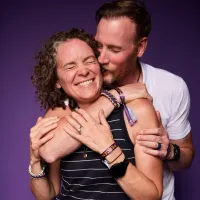
Meredith & Craig
Life partners, business partners, and best friends. We left the corporate grind to become fulltime entrepreneurs... with no idea what we were doing.
That made for some interesting, amazing, stressful, awesome, painful, scary, awful, awesome, insightful, unbelievable decisions, moments, experiences, relationships, and quite honestly, we wouldn’t have it any other way.
Our marriage is the foundation for everything else we build in our lives. It is a cheat code for life, and we believe that having that part dialed in levels up every other part of life.
We help others live their dream life... and that starts with a rock solid relationship so they can level up the rest of their lives too.
Tune in for a dose of laughter, love, a gentle ass kicking, and game-changing wisdom that will help you unleash your potential and build the life of your dreams together.
Subscribe to the Podcast


I really enjoy listening to these two share their experiences and stories. They always have an honest and lighthearted take, even if the subject is serious.
- Carrie
Charlottetown, PE
STOP SURVIVING.
START THRIVING.
Your Empire Deserves a Kick-Ass Marriage
Most people wait for a crisis to fix their team. We prefer Lead Indicators. Take 2 minutes to get your score and stop guessing where your relationship stands.

(Pro tip: It’s more fun than a tax audit, we promise.)
Not a quiz person? Grab the Winning Playbook instead.

Connect with us on:


© 2026 All Rights Reserved | Road of Life Coaching, LLC
PRIVACY POLICY | Terms and Condition
Custom Crafted By ExpertSites